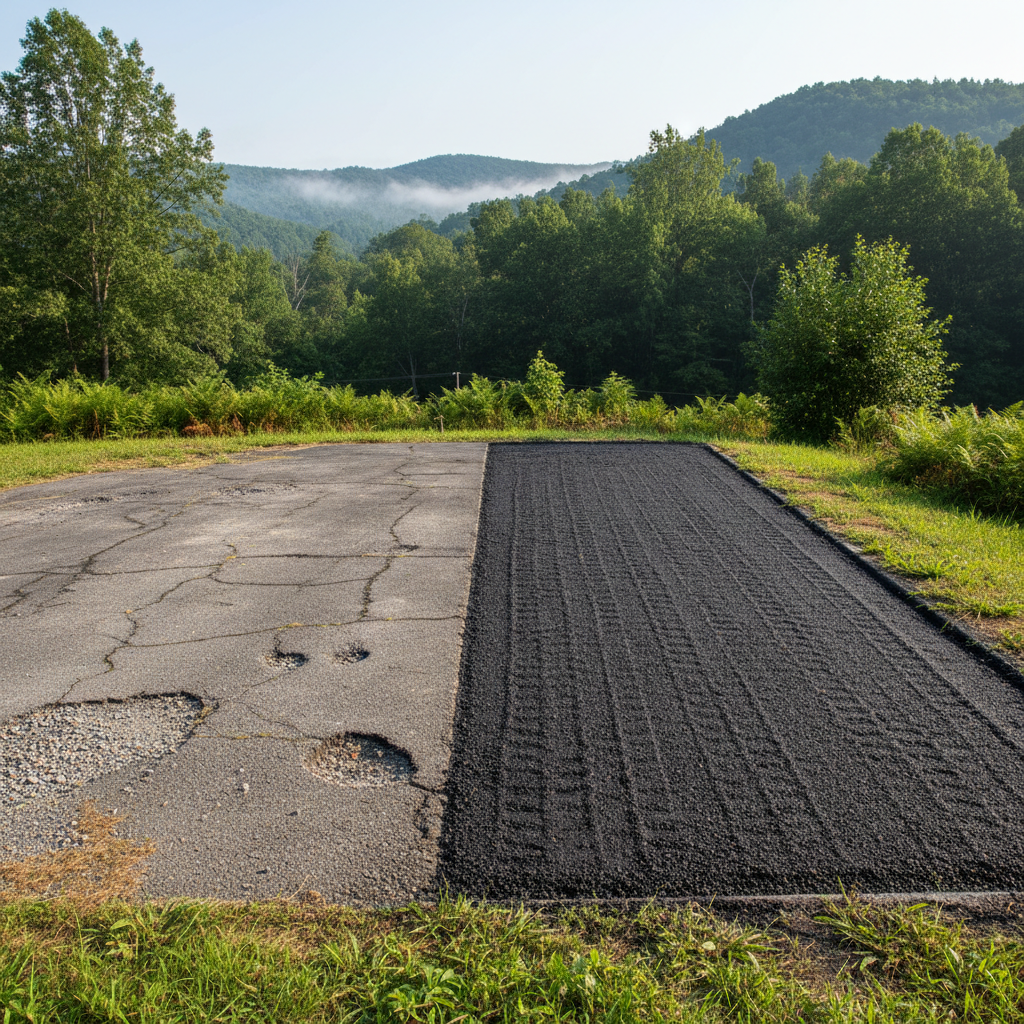
Alright, let's talk about fixing up your asphalt. If you've got cracks, potholes, or just a generally worn-out surface, you've probably heard the term 'milling' thrown around. It's basically grinding down the old asphalt to prep for new stuff. But it's not a one-size-fits-all deal. For folks here in Hernshaw, especially with our sometimes brutal winters and the clay-heavy soils common around here, understanding the difference between milling just the top layer and going for a full-depth mill and pave is crucial. Let's break it down.
What's Top Layer Milling All About?
When we talk about top layer milling—sometimes called 'surface milling' or 'shaving'—we're only taking off the top inch or two of your existing asphalt. Think of it like giving your driveway a really good haircut. We're getting rid of the surface imperfections: the shallow cracks, the ruts from heavy vehicles, or just that faded, oxidized look. Once that top layer is gone, we clean it up and put down a fresh layer of asphalt.
The Good Stuff (Pros):
- Cost: This is generally the cheaper option upfront. You're removing less material and using less new asphalt, so labor and material costs are lower.
- Speed: It's a quicker process. We can get in, mill, and pave a decent-sized area faster than a full-depth job, meaning less disruption for you.
- Appearance: You get a beautiful, smooth, black surface that looks brand new. It's a great way to refresh the look of your property without breaking the bank.
The Not-So-Good Stuff (Cons):
- Durability: This is where you might run into issues, especially if the problems go deeper than the surface. If your base layer—the gravel and compacted soil underneath the asphalt—is weak, cracked, or unstable, just putting a new top layer on won't fix that. Those underlying issues will eventually telegraph back up through the new asphalt. You'll see cracks reappear, sometimes in the exact same spots, within a few years.
- Maintenance: If the root cause isn't addressed, you'll be doing more frequent patching and sealing to keep it looking good. It's more of a band-aid if the foundation is bad, you know?
Going Full Depth: Mill and Pave
Now, full-depth milling is a different beast. This is when we grind down all the way through the existing asphalt layer, right down to the aggregate base. Sometimes, we'll even go a few inches into that base if it's really messed up. It's a much more comprehensive approach.
The Good Stuff (Pros):
- Durability: This is the big one. By removing all the old asphalt, we get a chance to inspect and, if necessary, repair or reinforce the base layer. A strong base is the secret to a long-lasting asphalt surface. When we put down new asphalt on a solid foundation, it's going to hold up much, much better against heavy loads, freeze-thaw cycles, and general wear and tear.
- Longevity: You're looking at a much longer lifespan for your driveway or parking lot. You might pay more upfront, but you'll get more years out of it before needing major repairs again. This is especially important for commercial properties or busy driveways.
- Structural Integrity: It effectively rebuilds the pavement structure from the ground up (or, well, from the base up). This is the best way to correct significant drainage issues or areas where the asphalt has completely failed.
The Not-So-Good Stuff (Cons):
- Cost: Yeah, it's more expensive. You're removing more material, hauling it away, and then putting down a thicker layer of new asphalt. More labor, more materials.
- Time: It takes longer. More steps involved, more equipment on site. It's a bigger project.
So, Which One for Hernshaw?
Here's my honest take, based on what I've seen working on properties all over Hernshaw and the surrounding areas for years. Our local conditions, especially the heavy clay soils and the way water can sit and seep in, often mean that problems aren't just skin deep.
If your asphalt is relatively new (say, less than 10 years old) and you're just seeing some minor surface cracking, fading, or shallow ruts, then a top layer mill and pave might be a perfectly fine, cost-effective solution to get a few more good years out of it. It's like a fresh coat of paint when the walls are still solid.
However, if your asphalt is older, if you've got significant potholes, deep alligator cracking, areas that are sinking, or if you've had issues with water pooling, then I'm almost always going to recommend a full-depth mill and pave. Trying to save a buck by just skimming the surface when the base is shot is usually a false economy. You'll end up paying more in the long run with constant repairs and an earlier need for a full replacement. For many of the older homes and businesses tucked back in the hollows and hillsides around here, where drainage can be tricky and the ground has shifted over decades, a full-depth approach is often the smarter play.
At Coastal Asphalt Co, we'll always come out, take a look at your specific situation, and give you an honest assessment. We'll tell you if a surface mill is enough or if you really need to go full depth to get a lasting repair. You want a solution that works for your property and your wallet, not just a quick fix that'll fail in a couple of years. Give us a call, and let's figure out the best path forward for your asphalt.